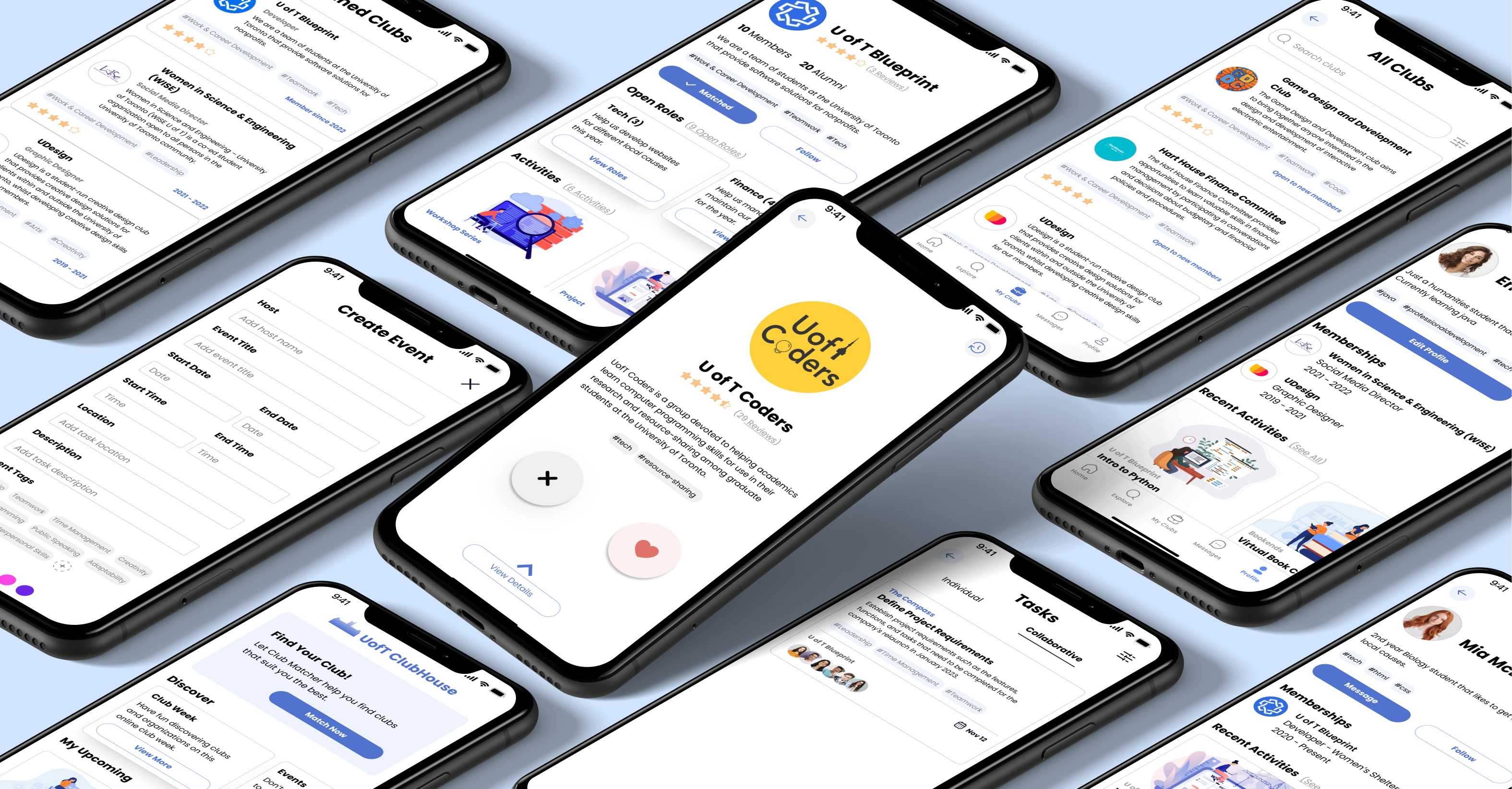
Helping students gain experience through clubs
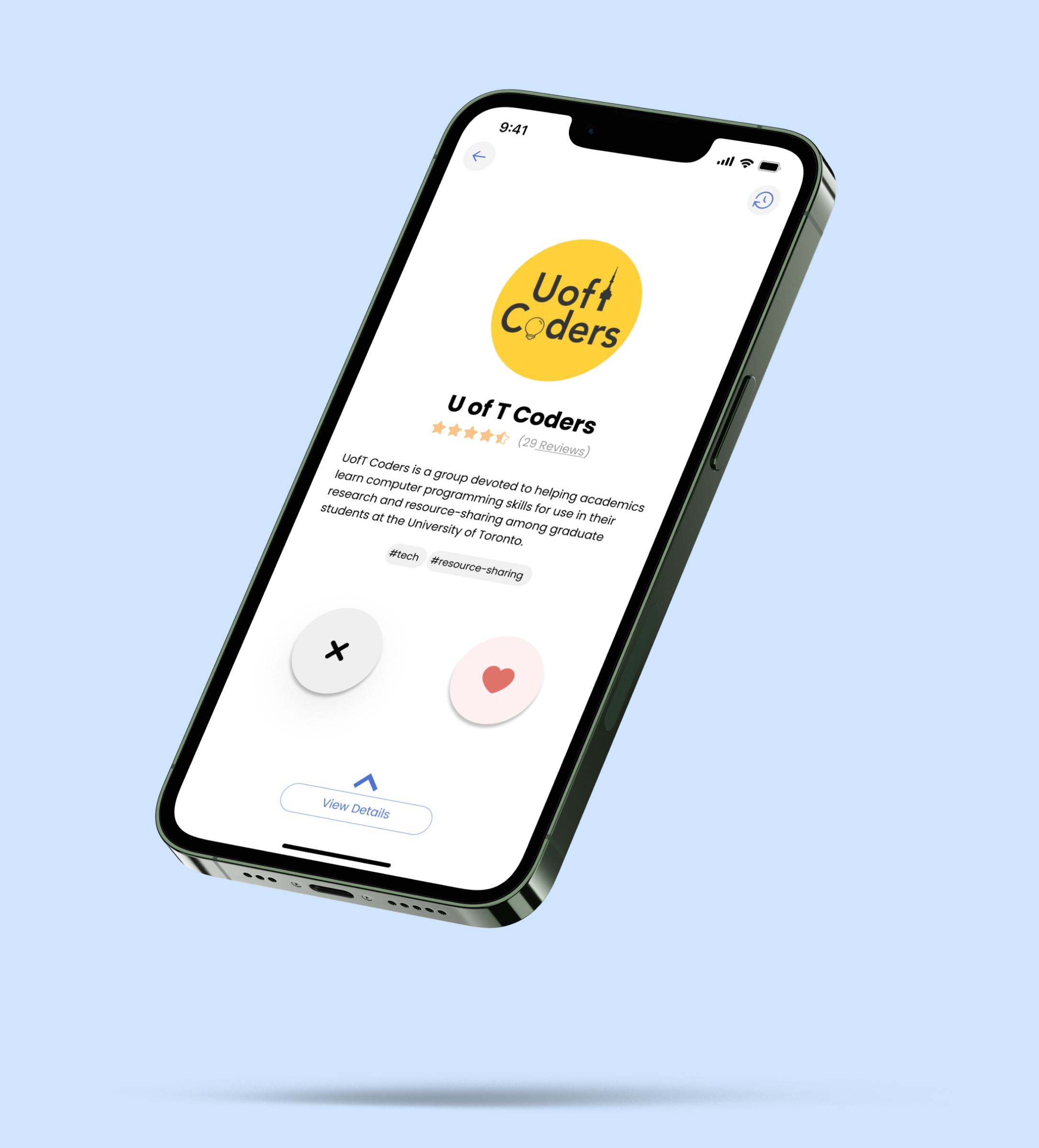
U of T Clubhouse: Helping U of T students gain experience through clubs
Finding the ideal student club at Canada's largest academic institution can be quite a daunting task. Yet, thanks to U of T Clubhouse, students can easily pinpoint their perfect match with just a single click.
Problem - Why clubs?
The University of Toronto is home to an extensive range of over 1,000 student clubs and organizations spread across its three campuses. Nevertheless, the sheer quantity of choices frequently poses a difficulty for students in their quest to access pertinent information about these clubs. As a result, students might not have their expectations met by clubs and could potentially miss valuable chances to enhance their professional skills.
Solution - What is U of T Clubhouse?
Clubhouse is a mobile platform explicitly created for University of Toronto students, providing them with the means to locate clubs that align with their interests and enable them to acquire practical skills. Through Clubhouse, students can effortlessly explore clubs that help them expand their network and equip them with the necessary skills to be prepared for their future endeavors.
Outcome
A high-fidelity prototype has been created to assist University of Toronto students in becoming actively engaged with the various clubs available.
Role
Product Design
Visual Design
Project Duration
May 2022 - Aug 2022
Team Members
Emily Rose, UXR
Sabrina Ma, UXD
Client
Innovation Hub, University of Toronto
Explore
Secondary Research - What do we know about student clubs?
There are over 1,000 clubs and student run organizations across U of T's three campuses.
Our secondary research aimed to gain insights into the significance of clubs in the lives of students. Our findings indicate that students primarily become members of clubs to establish connections with peers who share common interests, enhance their professional skills beyond academic boundaries, and find a means of relaxation and stress relief from the pressures of their academic pursuits.
Our research unveiled that the availability of professional development opportunities through co-op or internship programs is restricted in number and heavily contingent upon a student's chosen program of study. Consequently, students depend on their club experiences to foster transferable skills crucial for their career preparedness.
Primary Research - What are students saying about club involvement?
Our objective was to gain deeper insights into the club experiences at the University of Toronto (U of T). To achieve this, we engaged with students by administering questionnaires and conducting semi-structured interviews. Here are the outcomes of our research...
Among the 36 people who responded to the questionnaire,
11%
50%
67%
We carried out five semi-structured interviews with current students who are either currently involved in clubs or have been club members in the past. Here is a summary of their insights and experiences.
“It looks good on applications, whether you're applying for funding, an academic position, or an on-campus job.”
“The barriers were like if you didn't interact with these clubs in the beginning during the registration period you can't join during the year”
We uncovered 4 major themes from our interviews:


Define
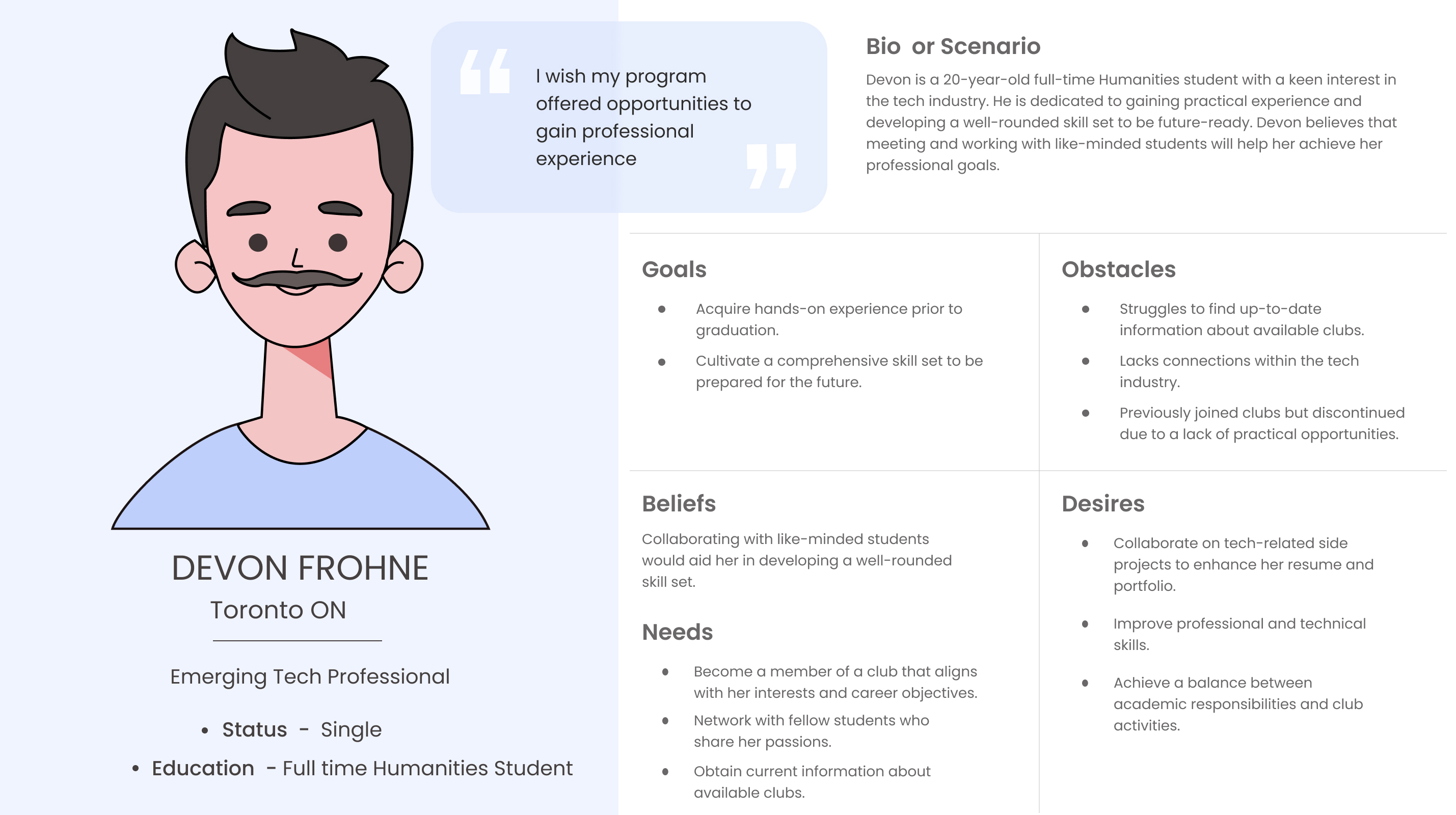
Meet Devon - The emerging tech professional
We crafted the persona Devon to encapsulate the needs, desires, objectives, and challenges that students encounter when searching for a suitable student club. Devon, a third-year humanities student, seeks avenues to enhance his professional skills beyond the confines of the classroom.
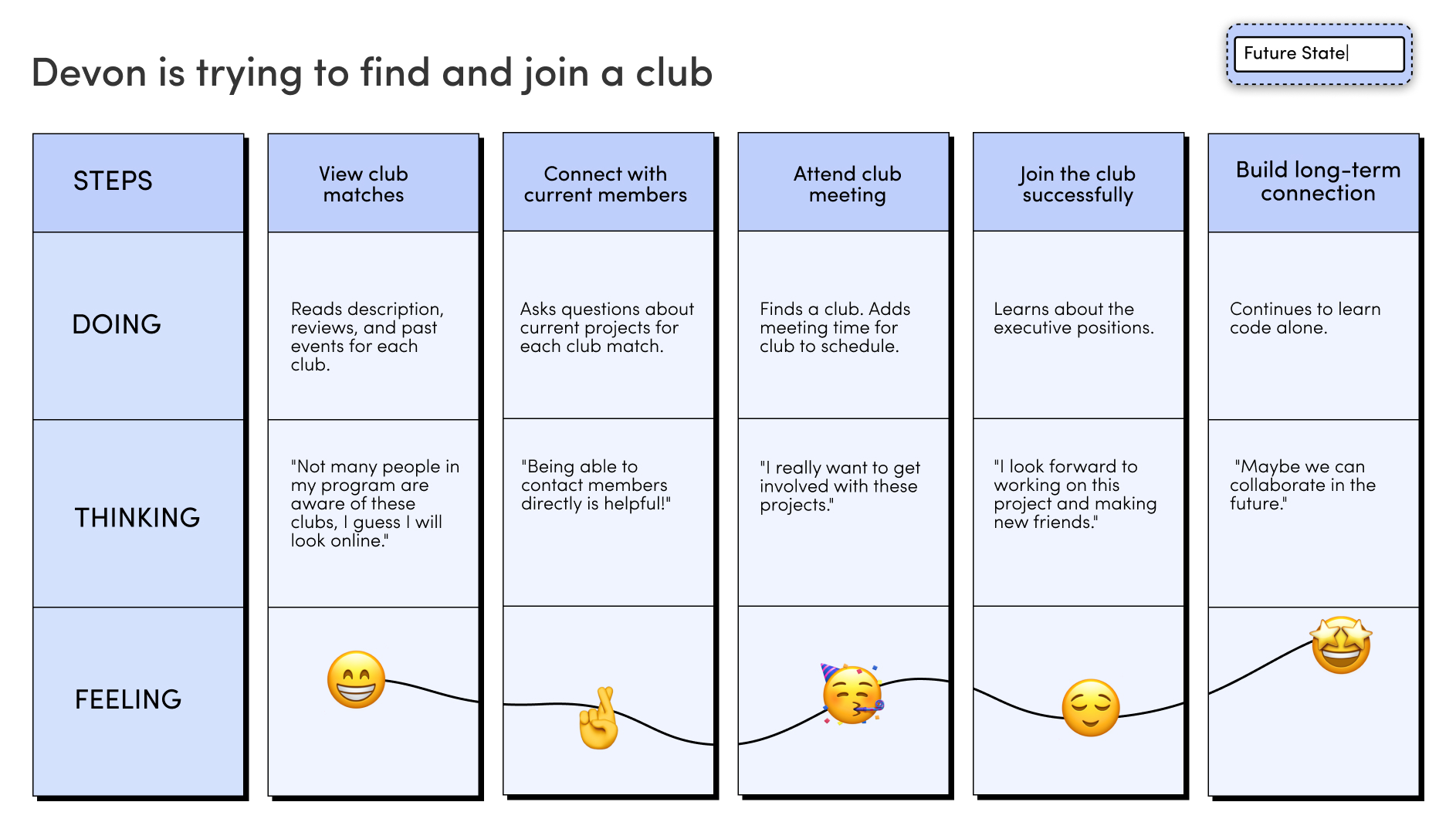
To better understand Devon's pain points, we created a journey map of her current situation.
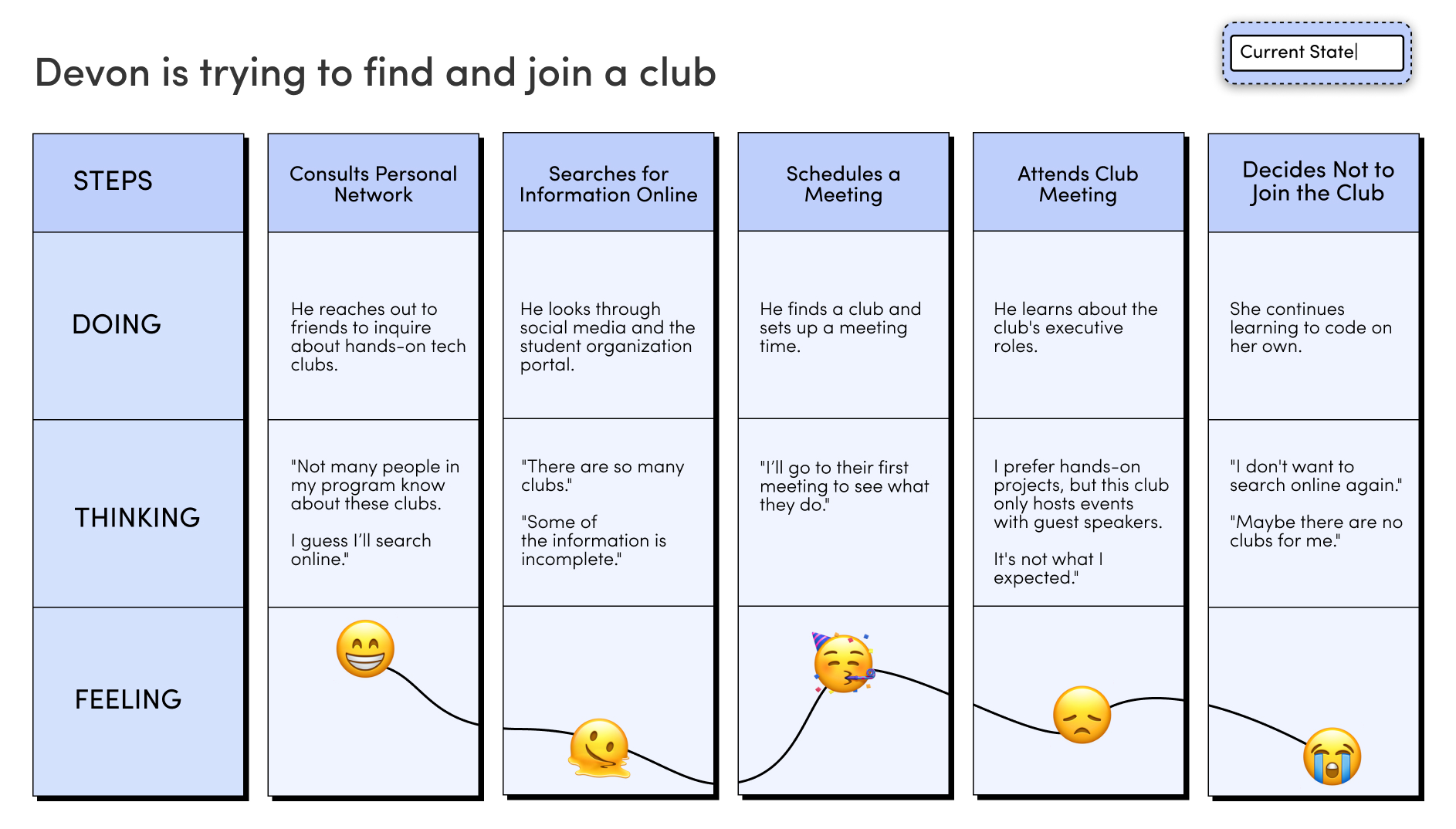
Based on this, we understand that Devon needs a way to:
- Easily discover information about clubs to make sure they match her interests and meet her expectations.
- Maintain ongoing connections with fellow club members even after the term ends, fostering long-lasting relationships with those who share her interests.
- Acquire practical experience to prepare for life after graduation.
How can we assist Devon in discovering clubs that enable her to cultivate the professional skills necessary for her future?
Develop
Prioritizing our ideas
Our team conducted a brainstorming session to generate a range of ideas aimed at improving Devon's situation. We then evaluated the potential impact and feasibility of each idea through a voting process and employed a prioritization grid to narrow down and select the most promising concepts.
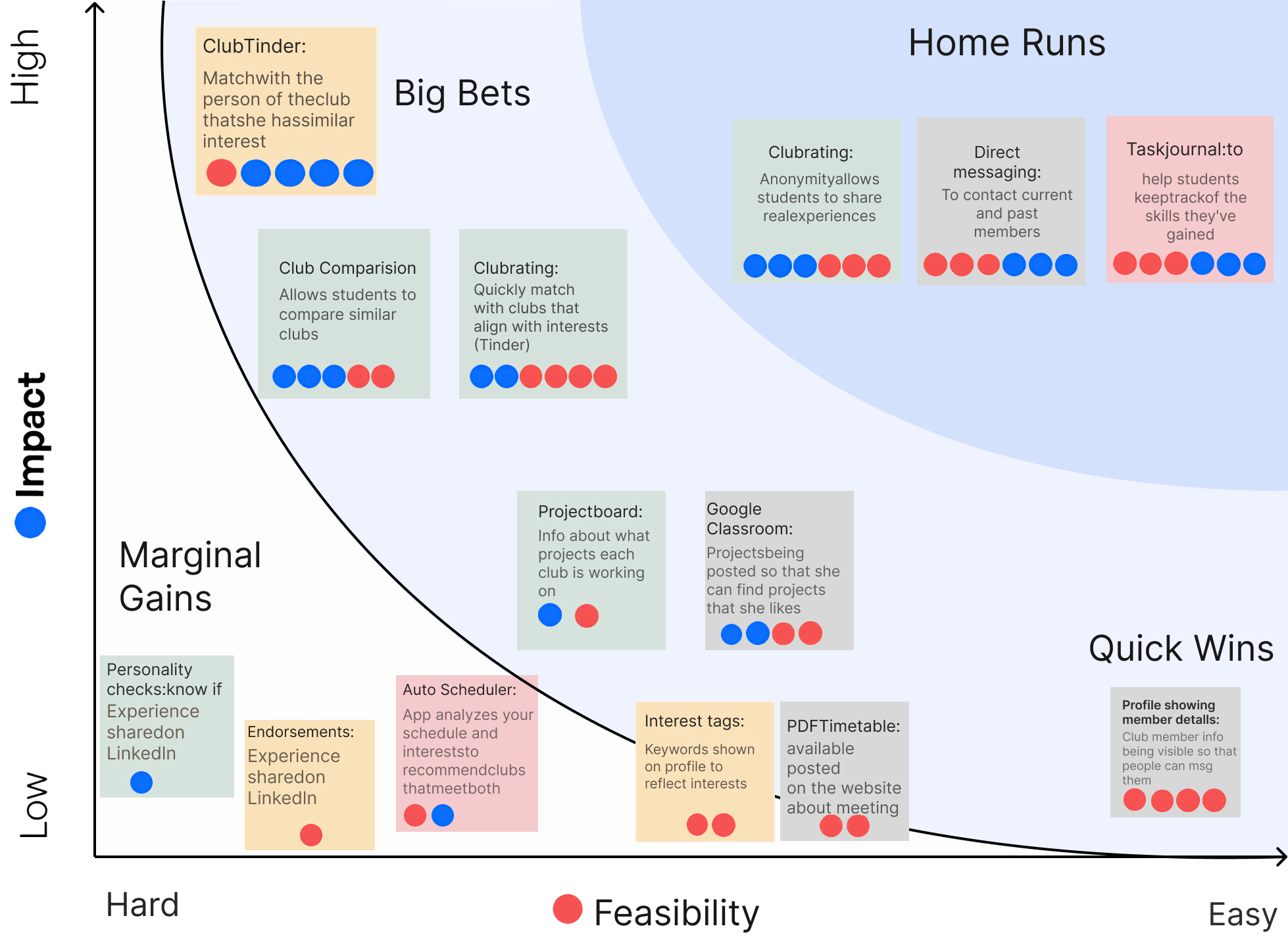
As a result of this process, the ideas we have chosen to concentrate on and further develop into features are:
Converting Ideas to features
- Having the capability to match with clubs adds an element of enjoyment and engagement.
- Allowing users to see club ratings and project boards through a club’s profile to get a sense of club expectations
- Updating outdated online information to accurately reflect club expectations.
- Connecting with current members through direct messages to ask questions
- Keeping a record of skills acquired within a club through a task journal.
With these concepts in place, Devon's path will now take the following shape:
Implement
Low-Fidelity Prototypes
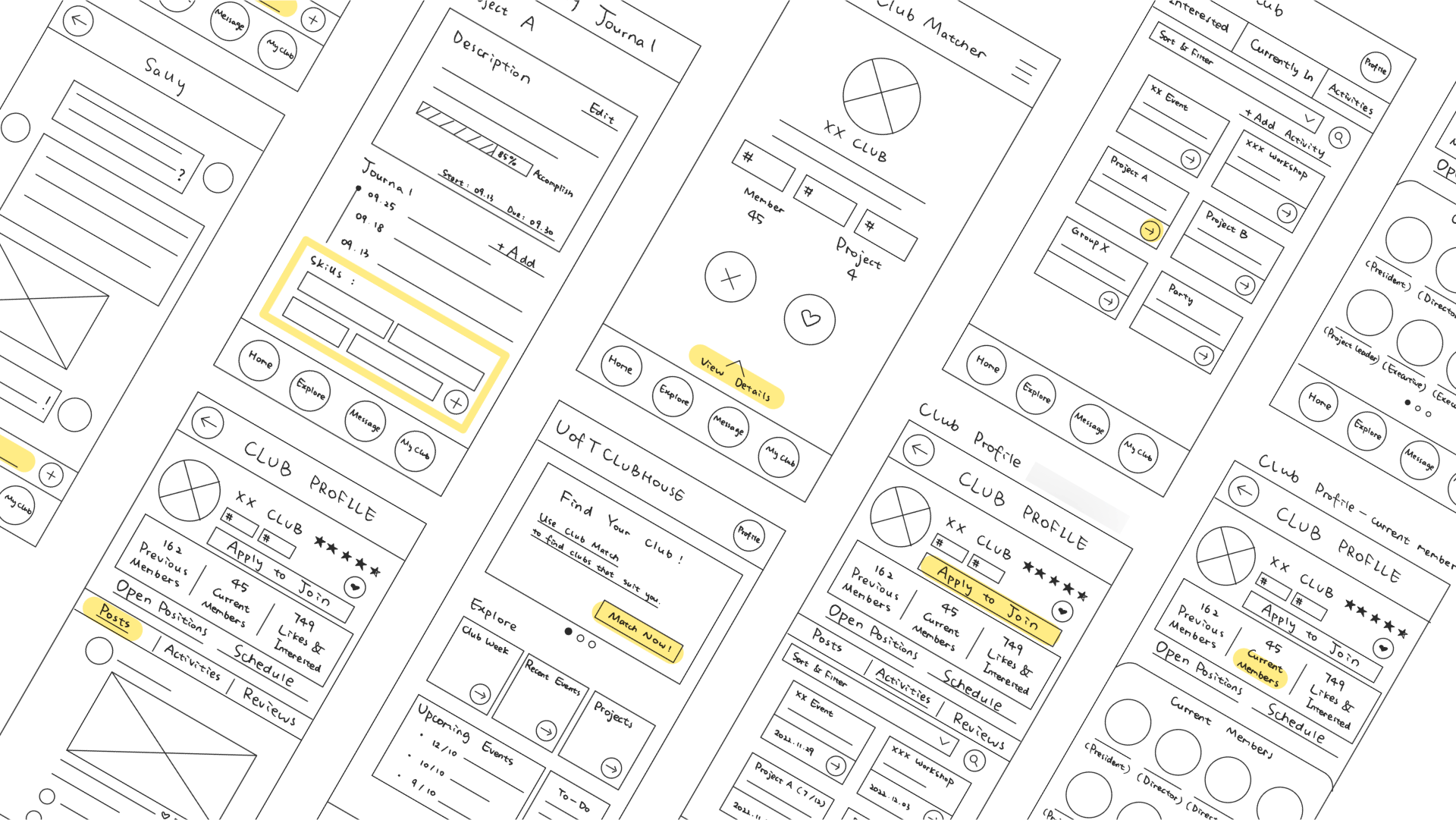
Our prototyping process commenced by creating rough, low-fidelity sketches for three crucial task flows:
1
2
3
Lean Evaluation
Prior to advancing to medium-fidelity screens, we performed lean evaluations on our low-fidelity prototype to pinpoint areas for enhancement. Our team enlisted four students from the University of Toronto, representing typical users of our product. Each participant was instructed to:
- Review the sketches for each storyboard for 5 seconds and discuss essential features from memory.
- Exploring a wide range of ideas, regardless of their initial feasibility, enriches the design process and often leads to more innovative solutions.
Here's what we found:
Positive Feedback
- Having the capability to match with clubs adds an element of enjoyment and engagement.
- Club reviews offer valuable insights into club expectations.
- The convenience of messaging club members within the app enhances the user experience.
Negative Feedback
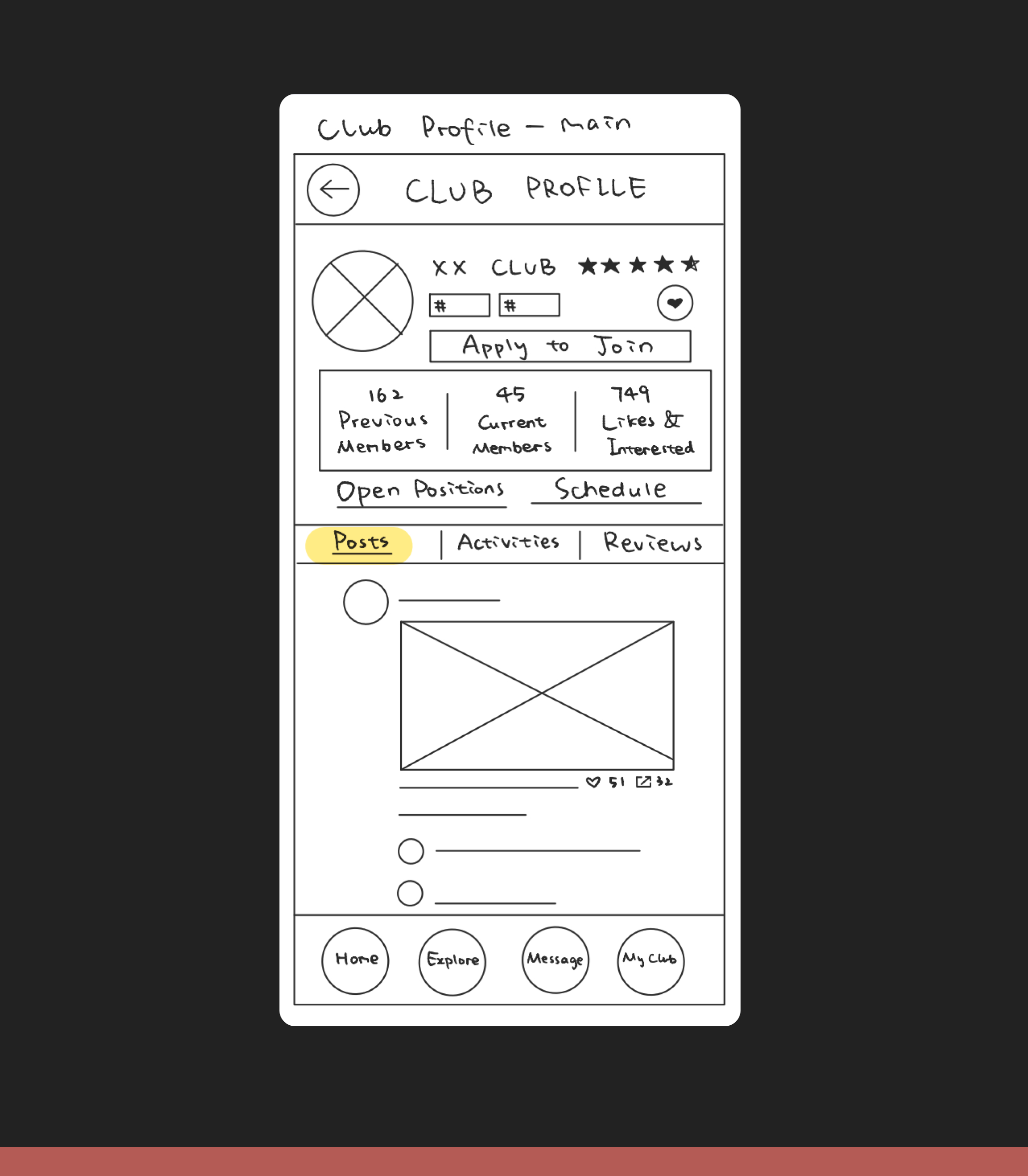
- It was challenging to recall the club profile screen due to the overwhelming amount of information.
- Club reviews offer valuable insights into club expectations.
- The convenience of messaging club members within the app enhances the user experience.
Updating the screens
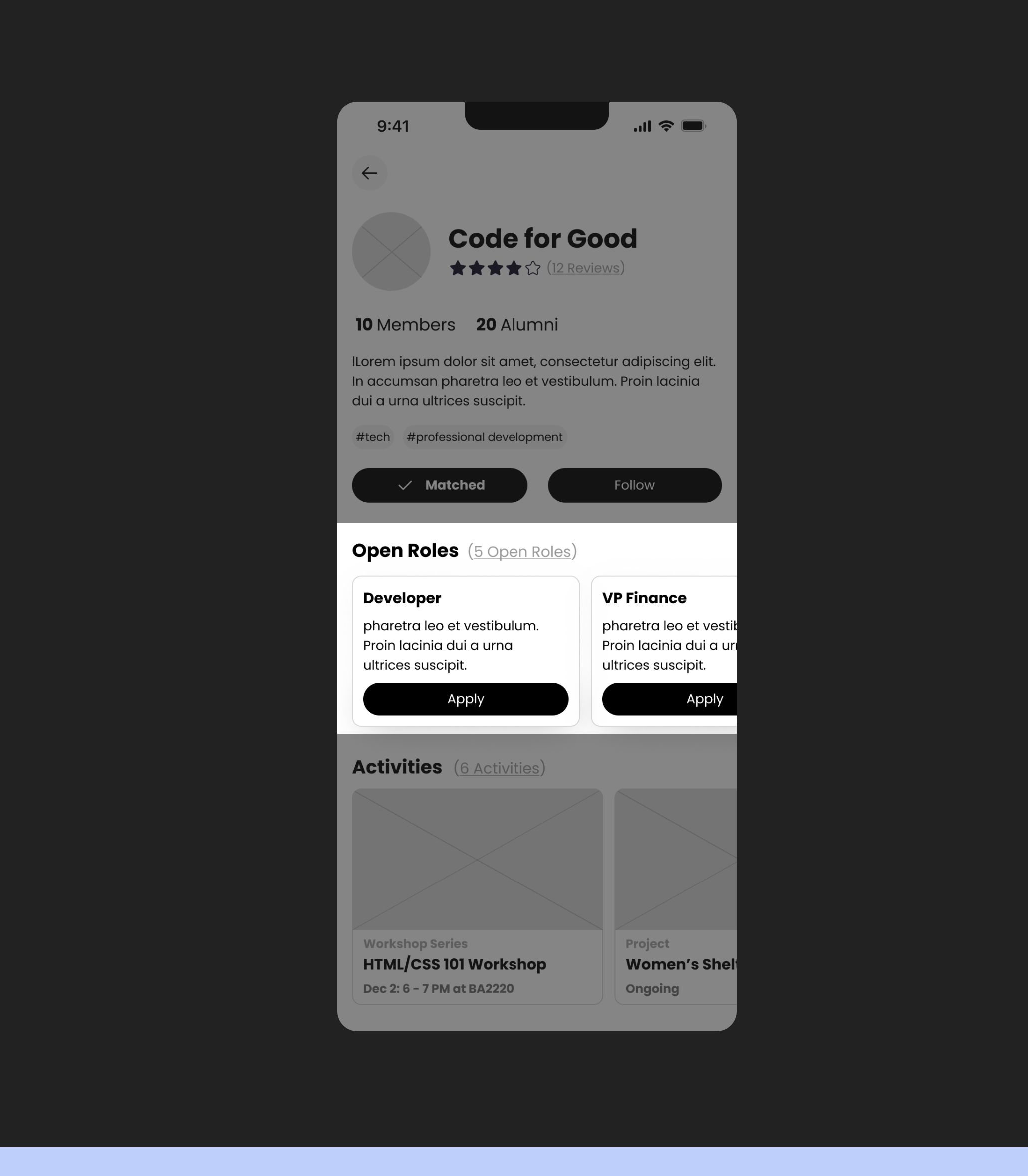
We incorporated the feedback from the lean evaluation to implement alterations in our medium-fidelity prototypes. Notable changes are highlighted below.
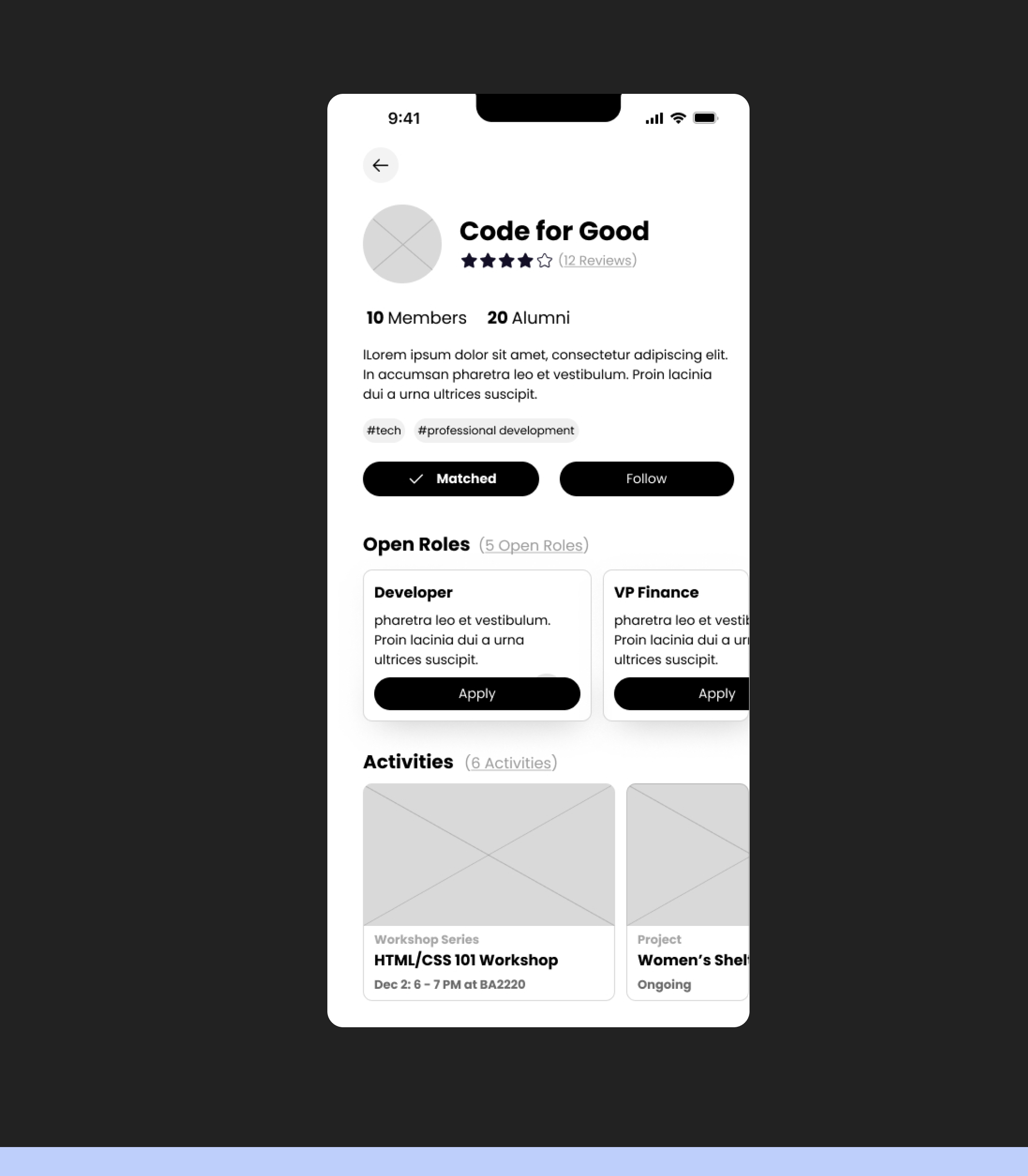
Before
Club profile page had too much information. Participants were unsure where to click.
After
Reduced the number of buttons on the top half of the screen by spreading it out throughout.
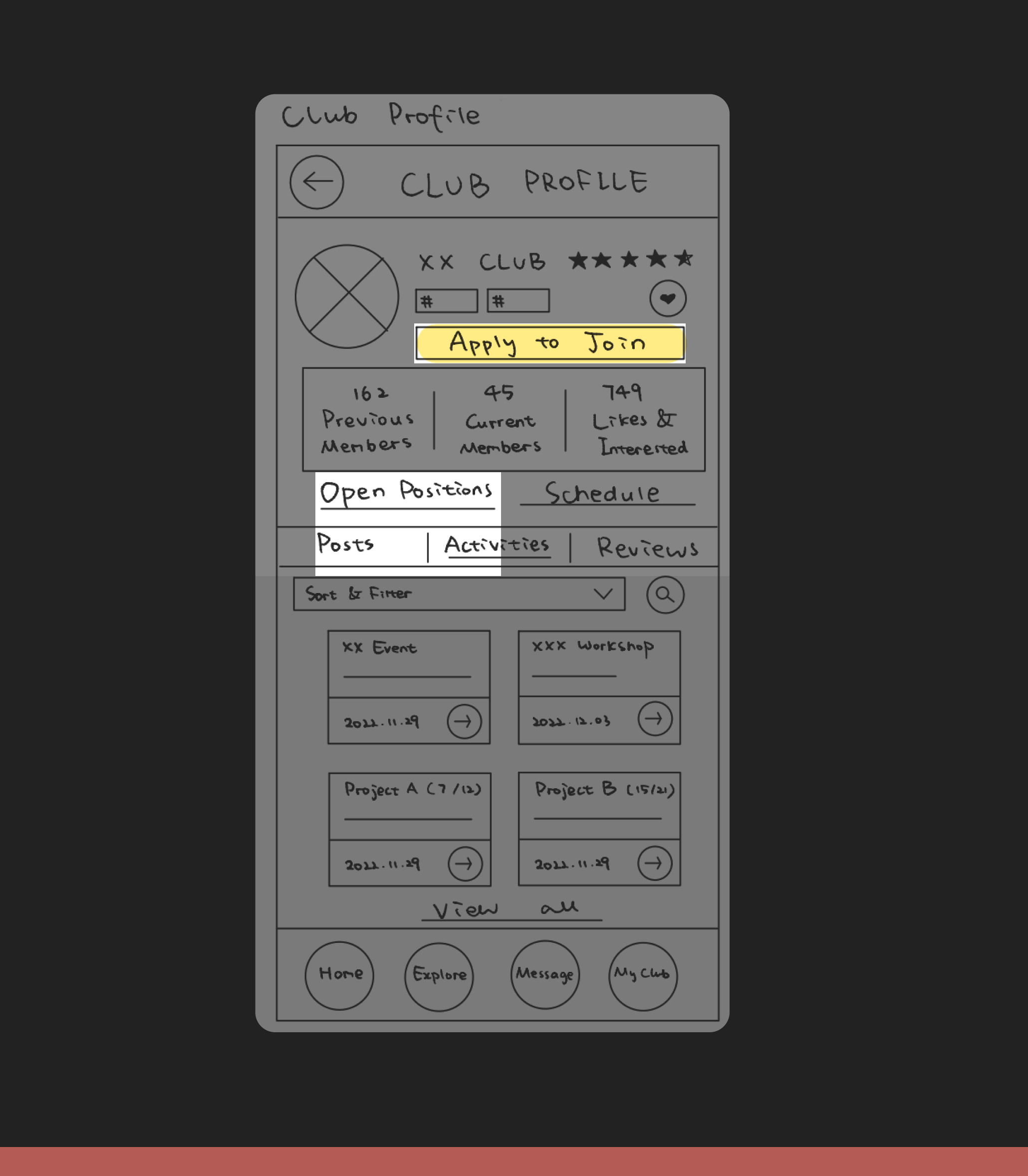
Before
Joining a club was unclear, with confusion over "Apply to Join" and "Open Positions" buttons.
After
Removed the "Apply to Join" button on top and replaced it with "Apply" buttons for different roles.
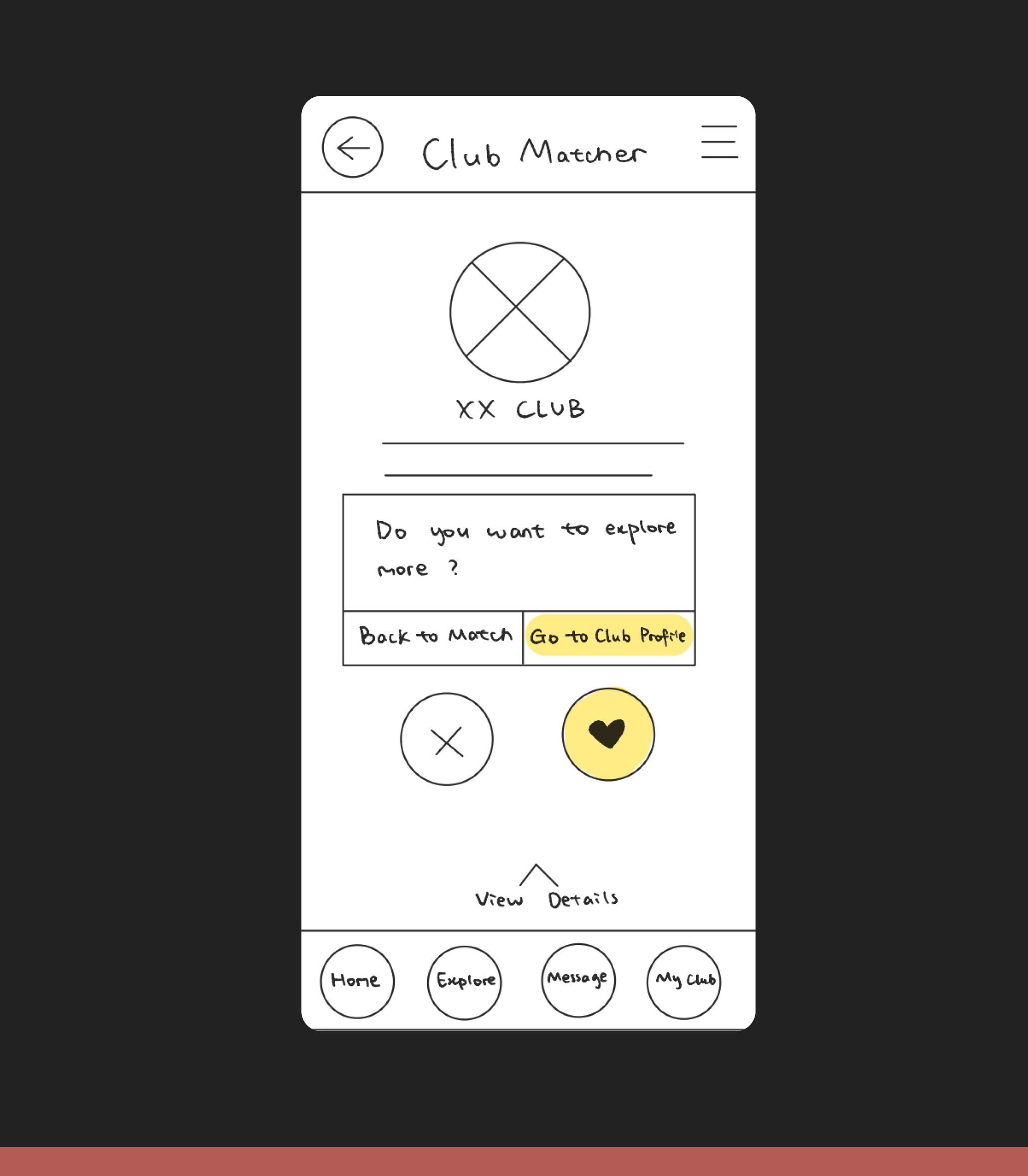
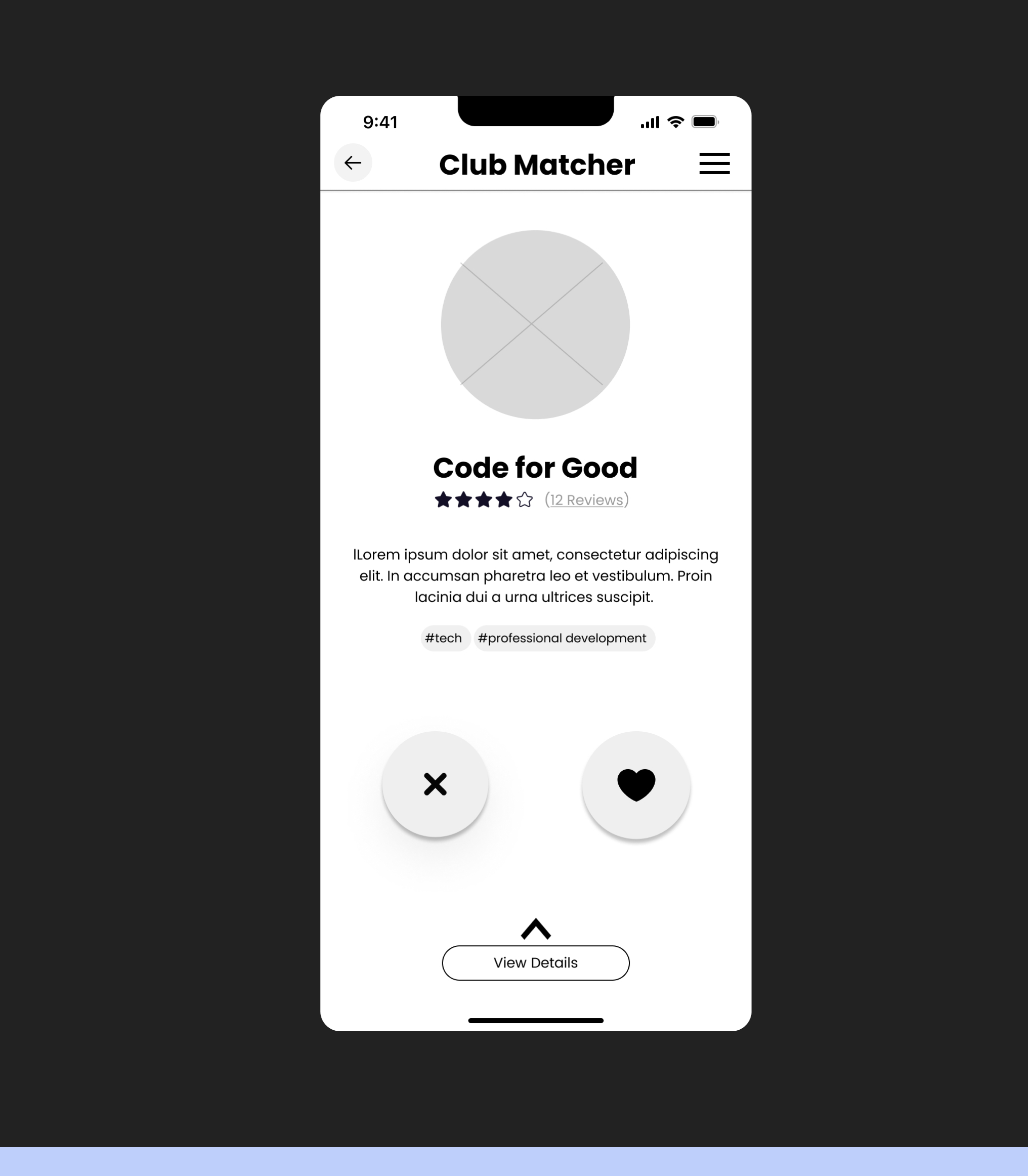
Before
Participants expressed frustration with the pop-up screen that appeared.
After
The pop-up screen has been removed to ensure that users can seamlessly continue matching without interruption.
Medium Fidelity Prototype
Here are the medium-fidelity storyboards for the three primary task sequences.
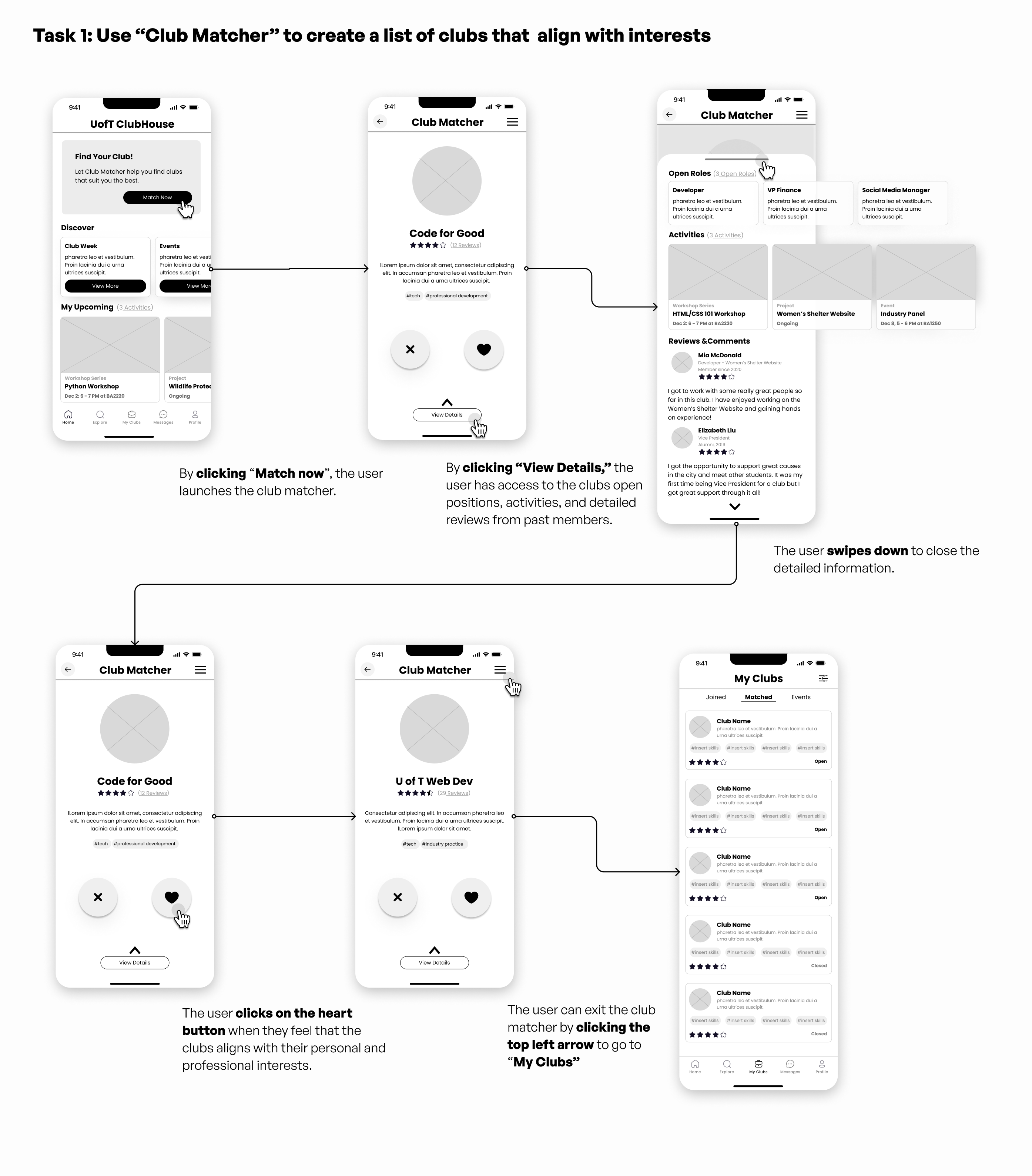
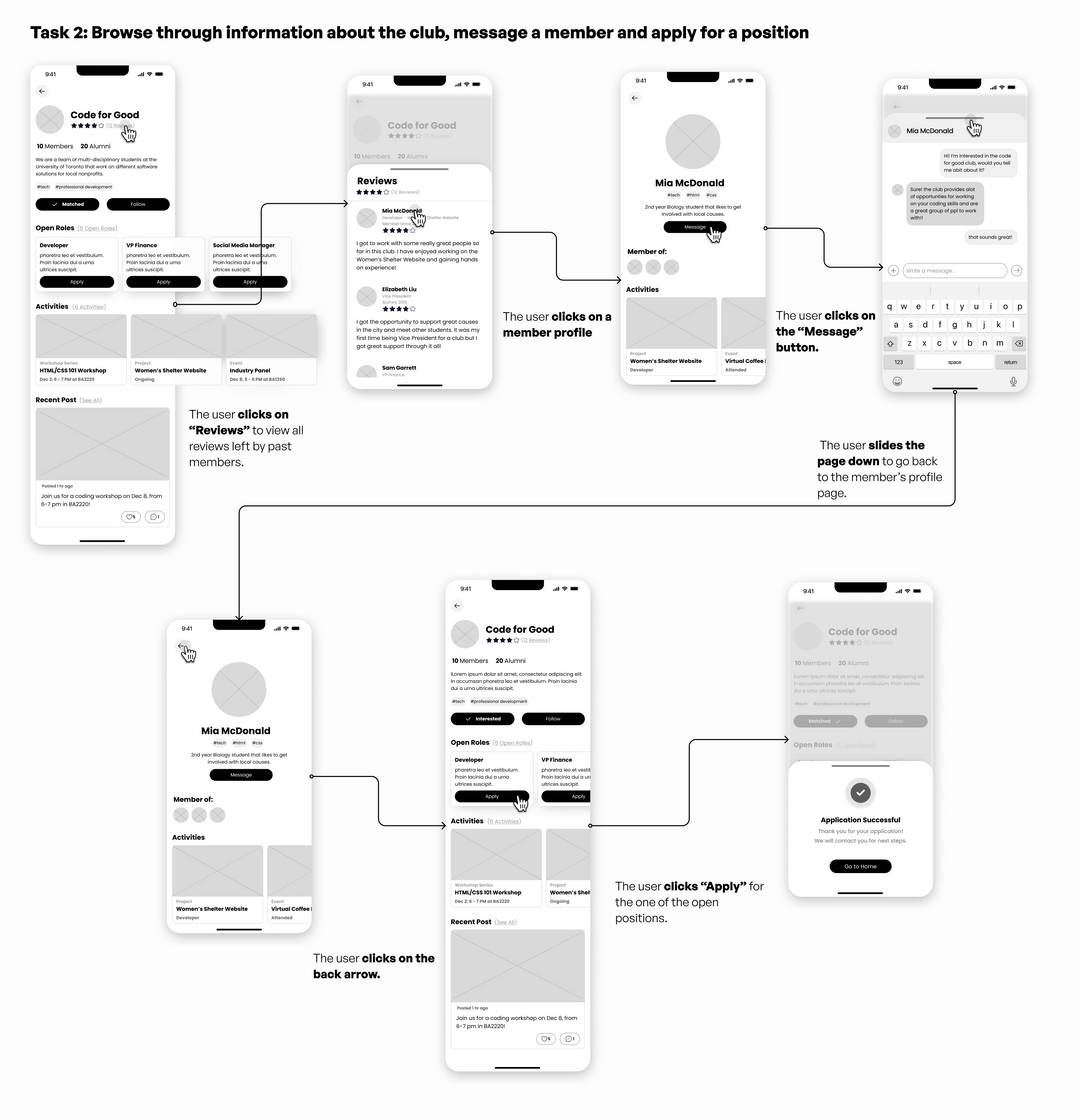
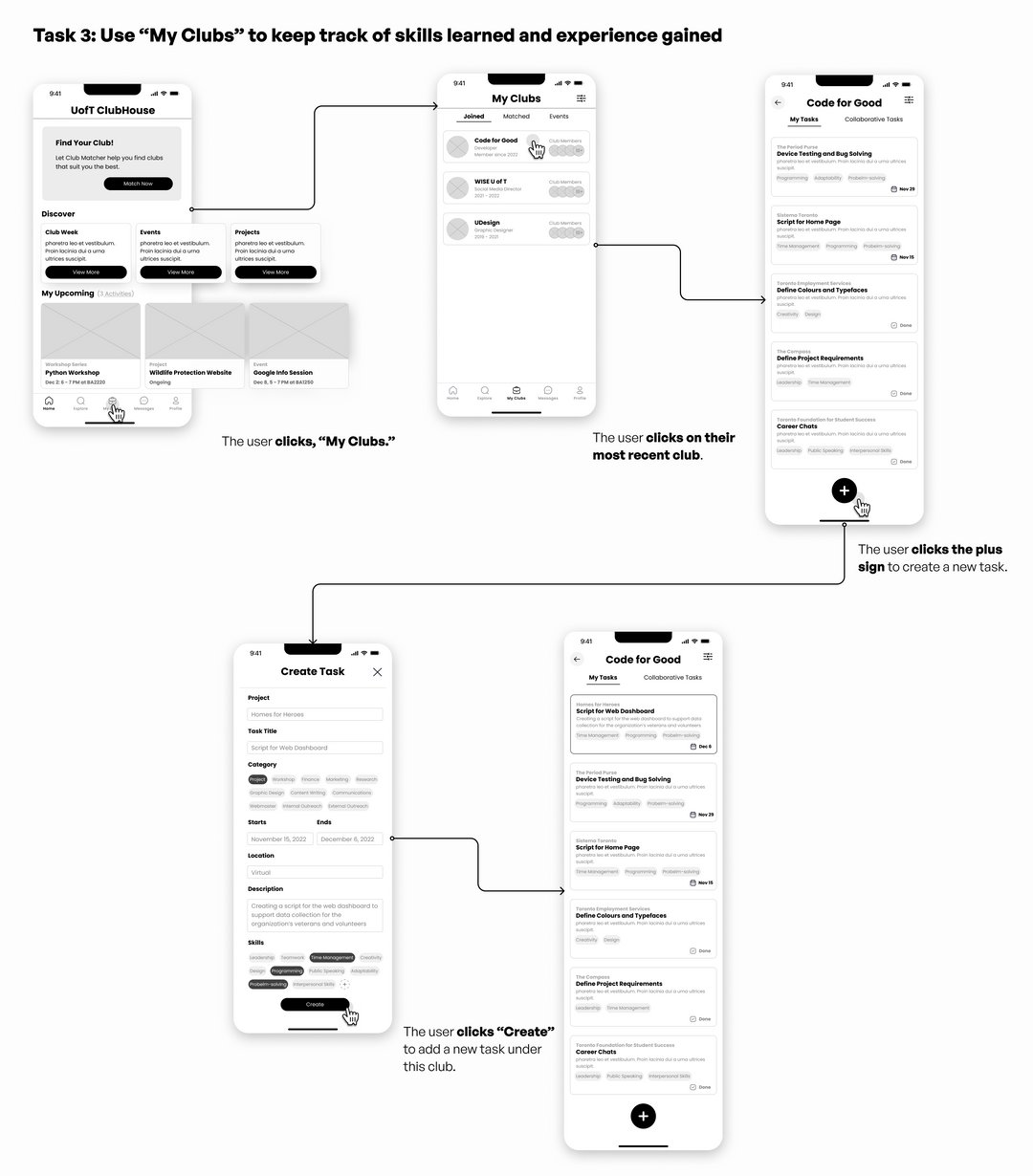
Here's what we found from our 4 usability tests::
Positive Feedback
- The home page is clear, easy to understand, and makes finding the matcher simple.
- Club Matcher made searching for clubs fun, engaging, and intuitive.
- The "My Clubs" page allows users to easily view all their past and current club projects, matches, and events in one place.
Negative Feedback
- The home page lacks a call to action for accessing the task journal.
- There is no way for users to view their match history, including recently liked and disliked clubs.
- It is unclear which section of "My Clubs" includes the task journal.
Prototype
High Fidelity Prototype
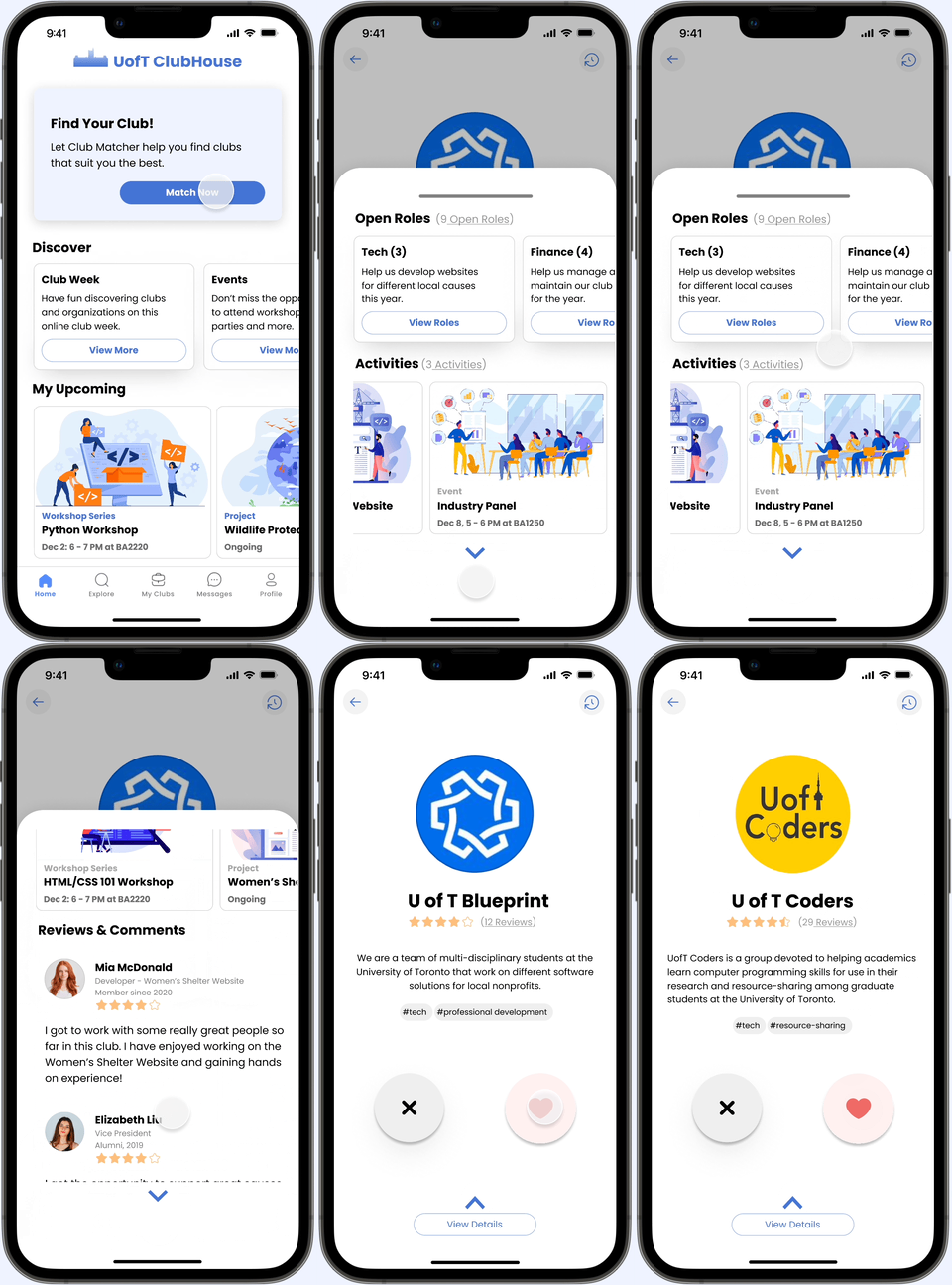
The high fidelity prototypes below capture the key features of our final design.
Club Profile
Club Matcher allows students to easily find and connect with clubs that match their interests with just a single click.
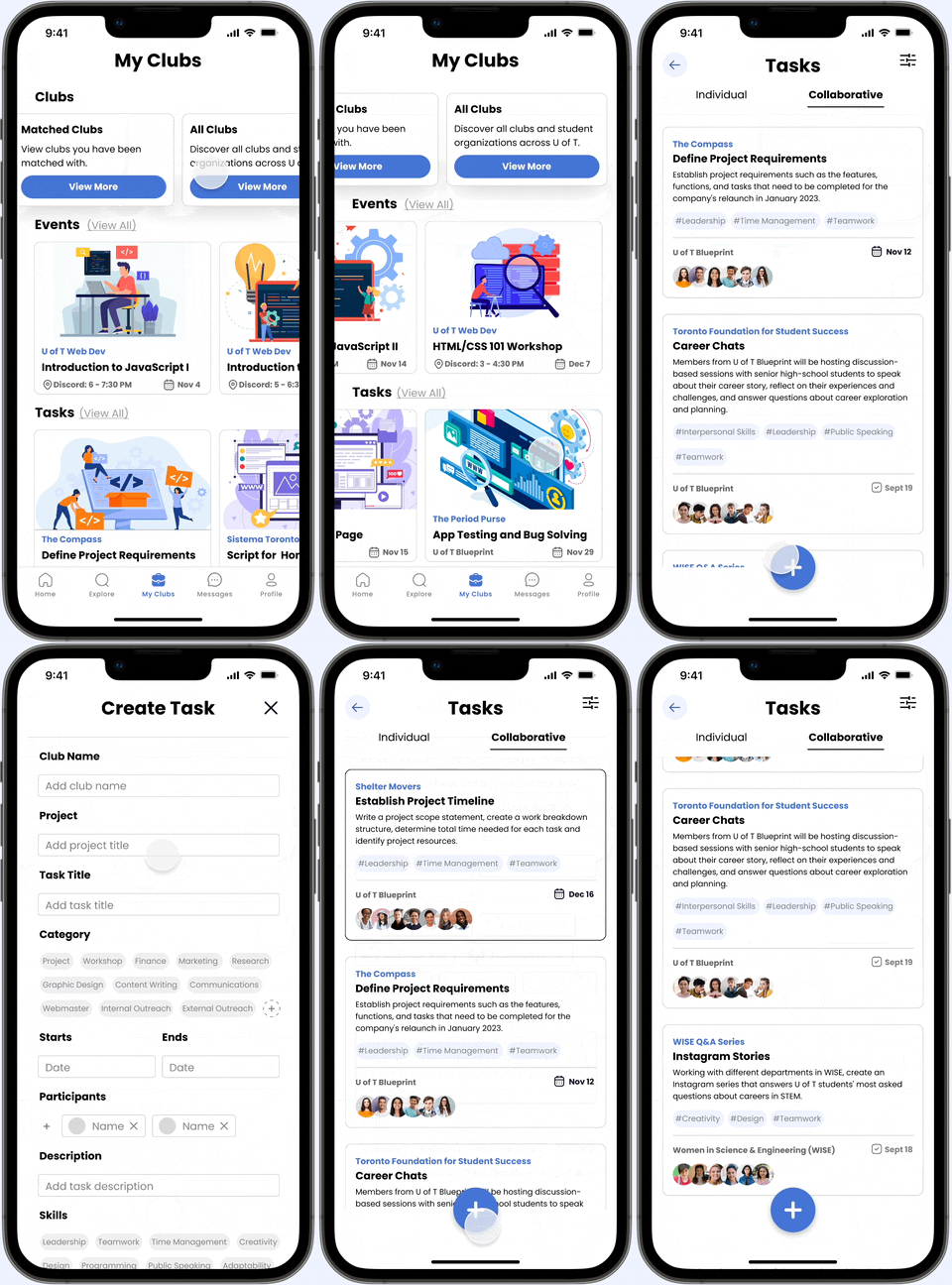
Task Journal
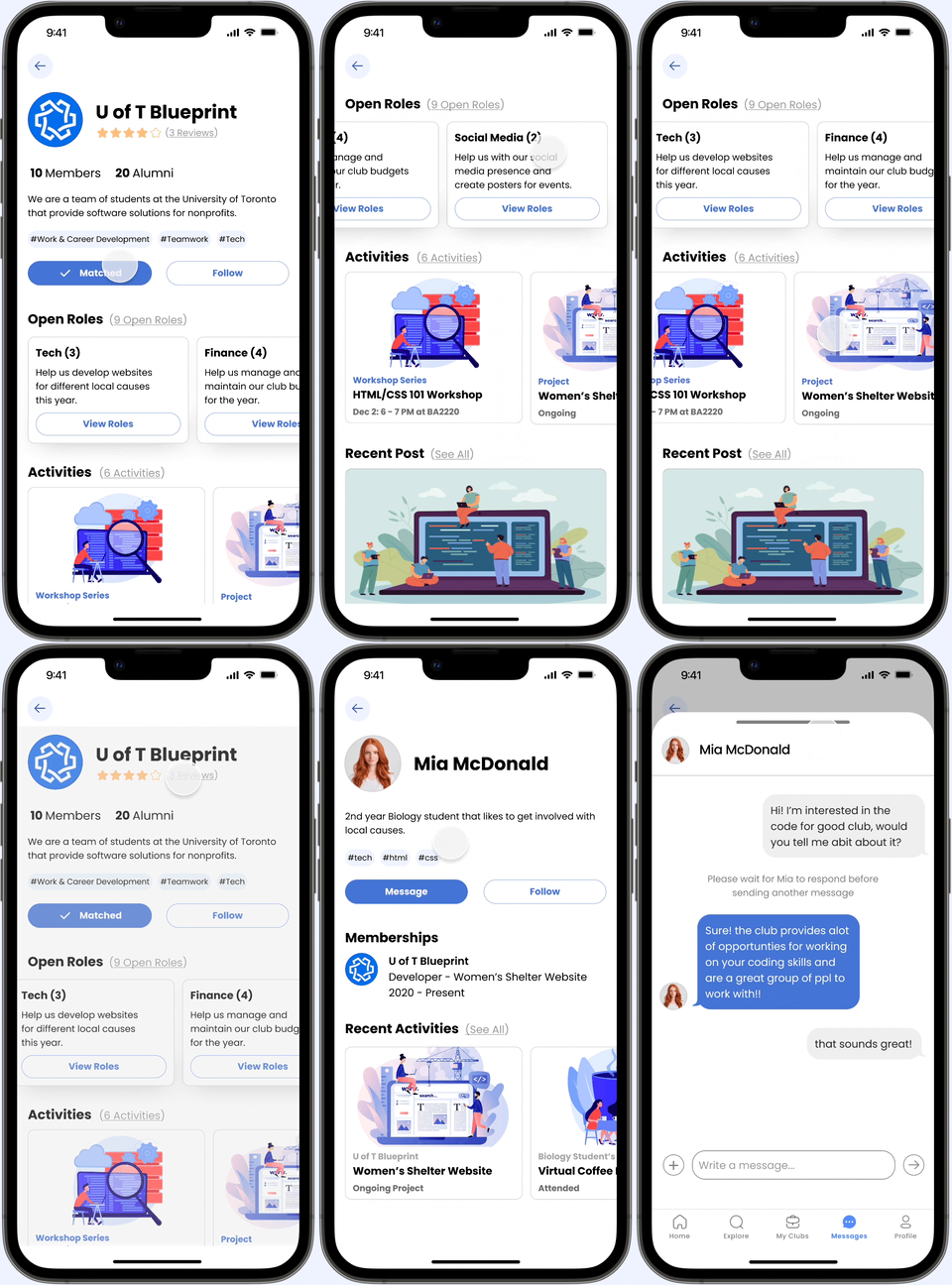
Club Profile enables students to explore club profiles, access information about open roles, activities, reviews, and engage in direct communication with current members for a better understanding of club expectations.
Club Matcher
Students can monitor and record their tasks and skill development to better prepare for future job applications.
Takeaways
Learnings and Takeaways
I'm glad I overcame my hesitation to tackle product design projects and now appreciate their worth! I've also realized that I need to work on pacing myself better.
Storytelling enables better user experiences
- I learned the importance of storytelling during our twice-weekly presentations, realizing its power to captivate and engage the audience.
- Effective storytelling can help audiences understand and empathize with the challenges and problems users face.
- I was able to clearly communicate problems, solutions, and design decisions throughout the design process by using storytelling.
Iteration is an important part of design
- I've learned not to fall in love with the first solution I come up with and to keep iterating to refine and improve the design..
- I make it a point to sketch out even the ideas that seem unusual or odd, as these can sometimes inspire breakthroughs for the final product..